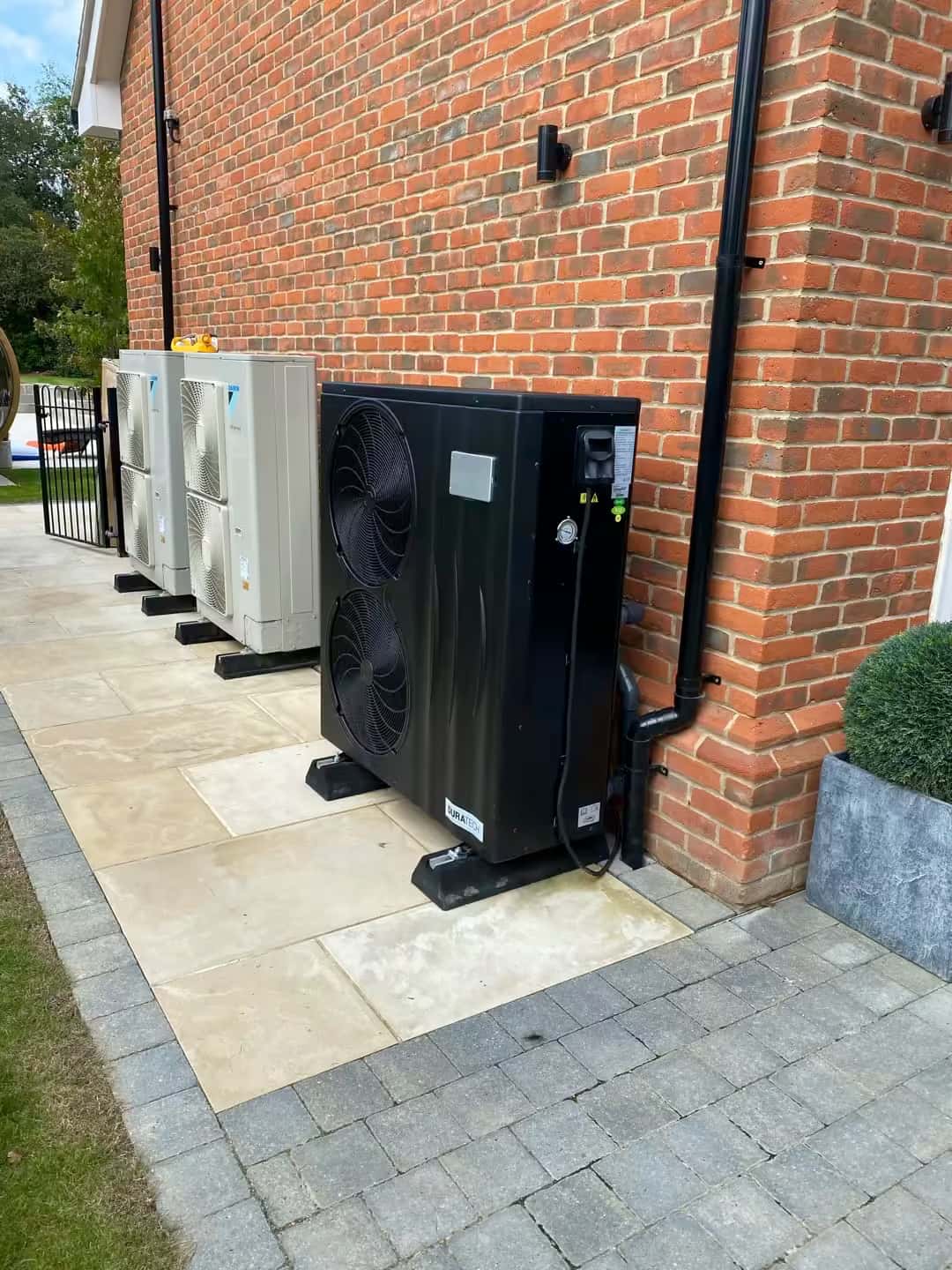
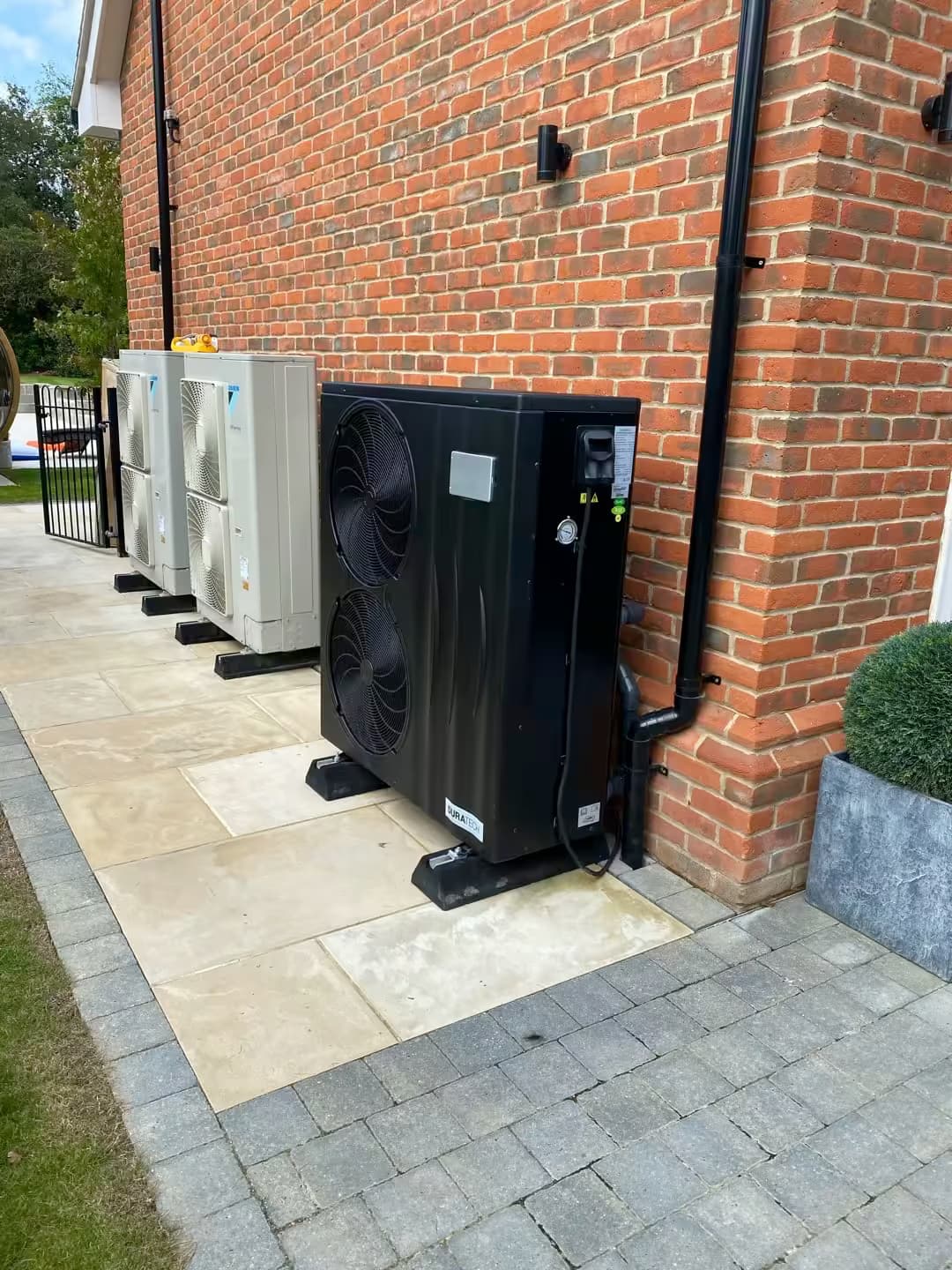
Heating is usually the biggest running cost of a pool, so it's worth choosing the right system. The two main options are an air source heat pump and a gas boiler. Each has a place, and some pools use both.
How a pool heat pump works
A heat pump takes heat from the outside air and moves it into the pool water. Because it's moving heat rather than making it, it delivers several units of heat for every unit of electricity it uses. That makes it cheap to run, especially in the warmer months when there's plenty of heat in the air.
- Low running costs for most of the swimming season
- Works best keeping a pool at temperature, rather than heating it from cold quickly
- Less efficient in very cold weather, which matters more for pools used all year
- Needs space outside, and some thought about where the noise and airflow go
How a pool gas boiler works
A gas boiler heats the water directly. It isn't affected by the outside temperature and can bring a pool up to temperature much faster, which suits pools that are heated occasionally or need to warm up quickly. The trade-off is a higher cost per unit of heat.
Heat pump or gas boiler: which suits your pool?
For most outdoor pools used from spring to autumn, a correctly sized heat pump is the economical choice. For indoor pools used all year, a heat pump often does the day-to-day work, with a boiler or other back-up for the coldest spells. Pools that are only heated now and then can be better served by a boiler.
Getting the size right
An undersized heat pump will run flat out and still struggle; an oversized one costs more than it needs to. We size heating to the pool's volume, how it's covered, where it sits and when you want to use it.
Pool heating installation in Surrey, Berkshire and London
Our Gas Safe and F-Gas engineers install and service heat pumps, gas boilers and air handling units. We'll look at how you use your pool and recommend what will be cheapest to run over its life, not just to buy.
Read more about our pool heating, or call us on 01483 904704.