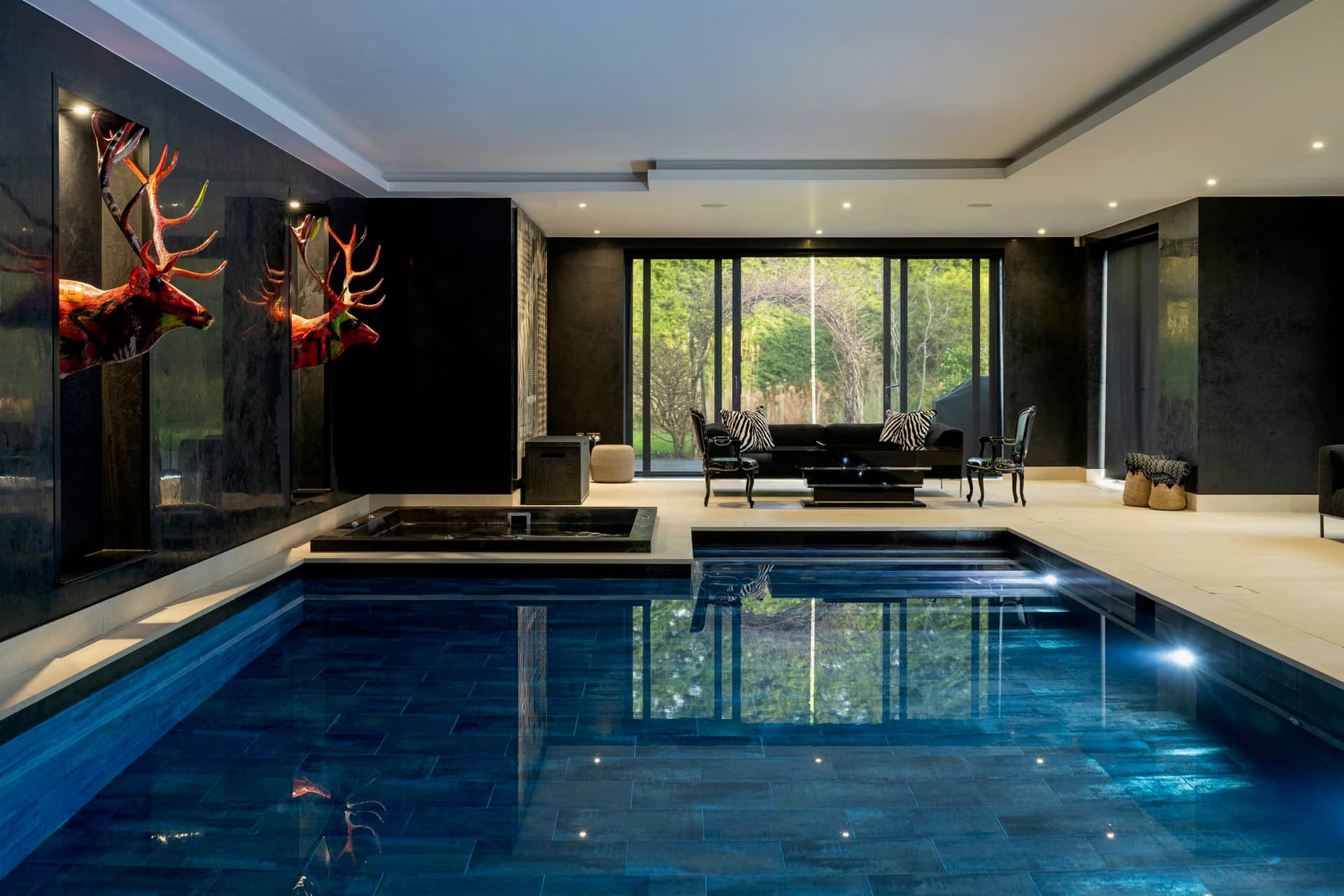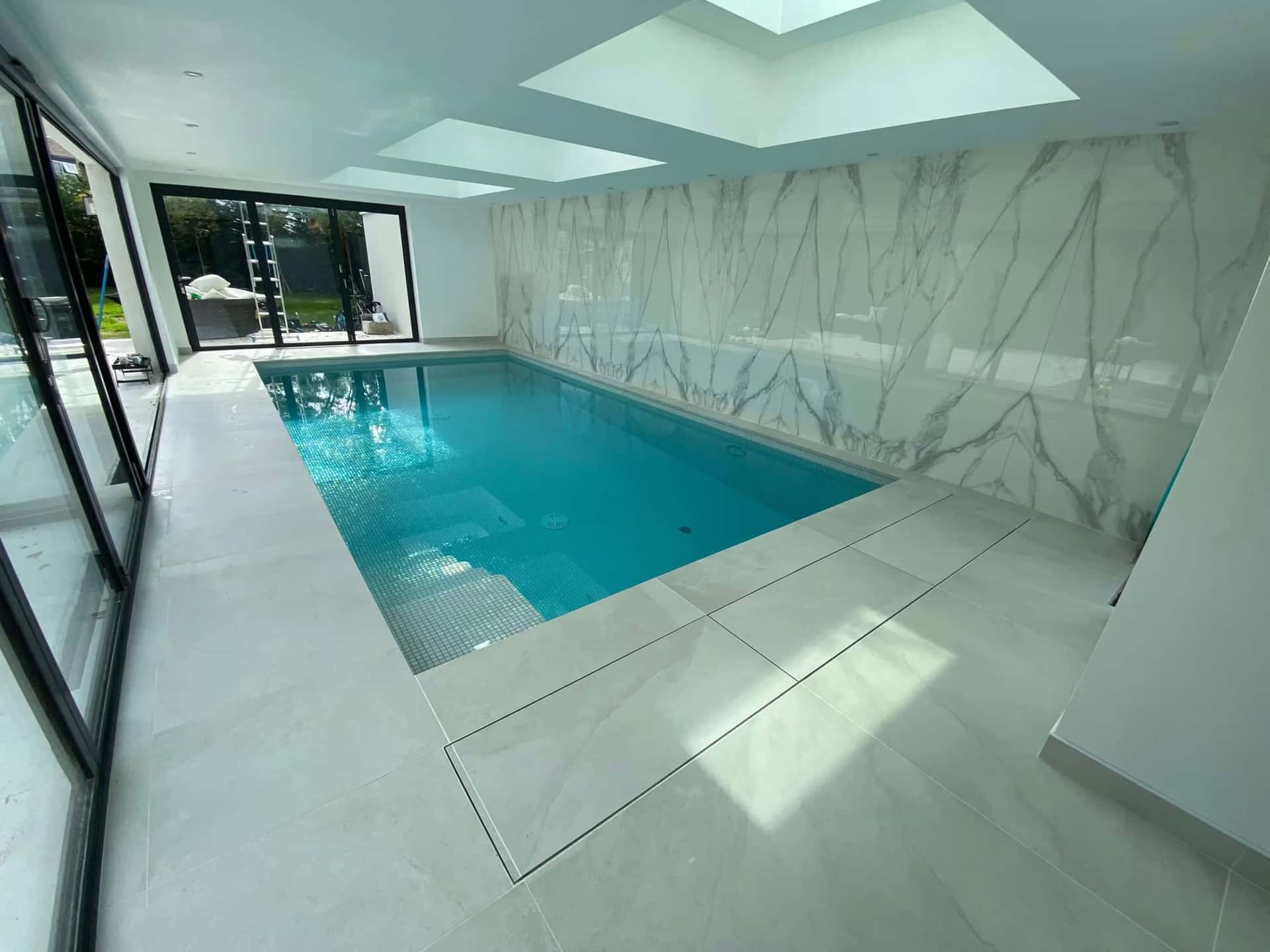
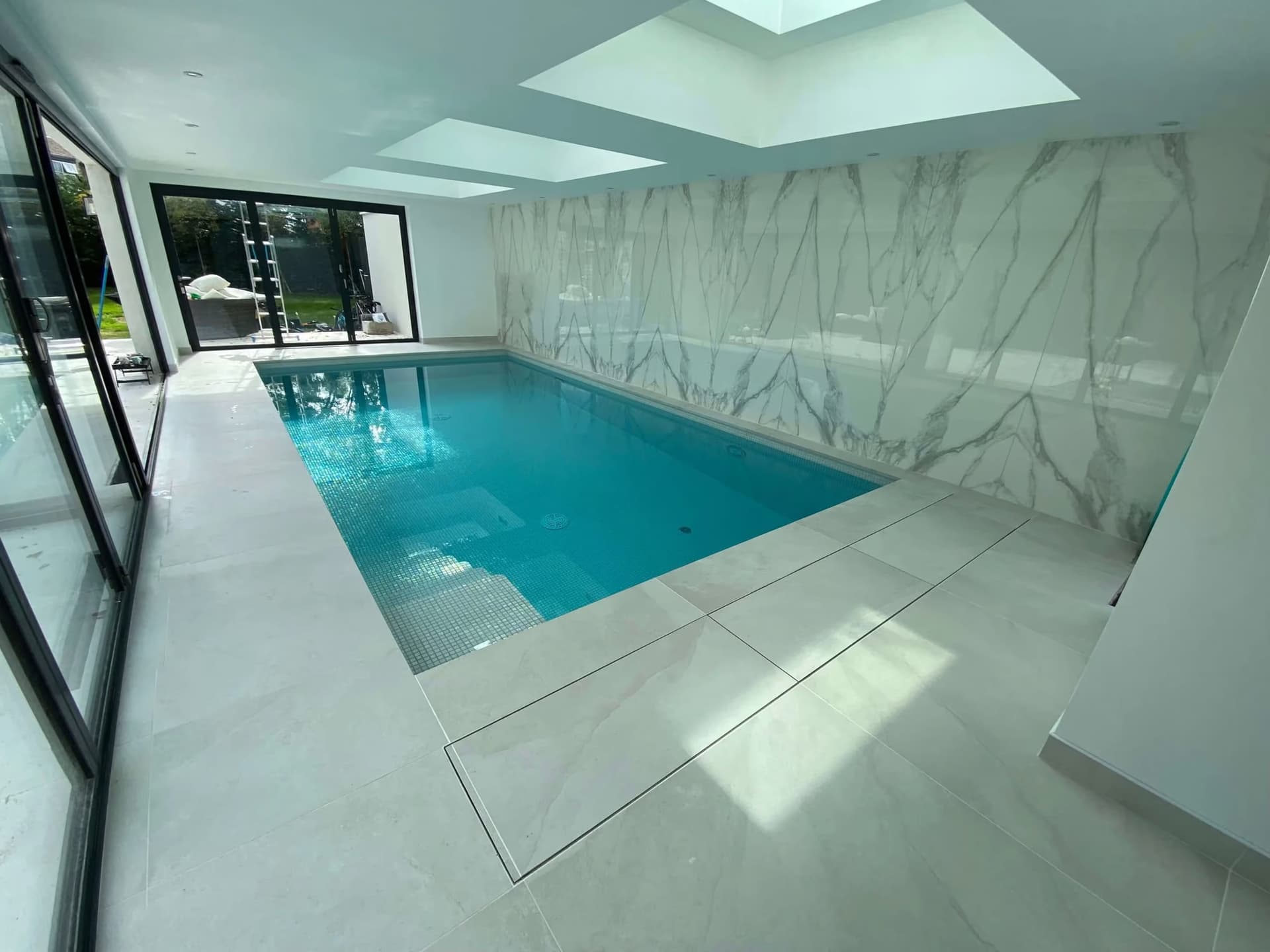
Streaming windows, damp patches and a musty smell are common in indoor pool rooms in winter. They're more than a nuisance. Left alone, high humidity can damage the building and make the room unpleasant to use.
Where the moisture comes from
Warm pool water evaporates into the air all the time. When that warm, moist air meets a cold surface such as a window, an outside wall or the roof, it condenses. In winter those surfaces are at their coldest, so the problem shows up most.
What it can do
- Rot timber, corrode steel and spoil plaster and paint
- Encourage mould on walls and ceilings
- Make the room feel clammy and uncomfortable
- Waste heat, as the energy that evaporated the water goes out with the damp air
How to reduce indoor pool condensation
The main tool is an air handling unit, designed for pool halls. It removes moisture from the air, brings in fresh air and, in most modern units, recovers heat that would otherwise be lost. It needs to be the right size for the room and pool, and serviced so it keeps working as it should.
Temperatures matter too. Keeping the air a little warmer than the water reduces evaporation, so the air handling has less to do. Your engineer can set up the right balance for your room.
When to call us
If condensation has got worse, your air handling unit is noisy or struggling, or you've had a refurbishment that changed the room, it's worth a check. We service and install air handling units and can look at the whole room, including the pool heating and cover, to find the cause.
Read more about our pool heating & air handling, or call us on 01483 904704.